
Analysis: Grant Funding for Disability Orgs
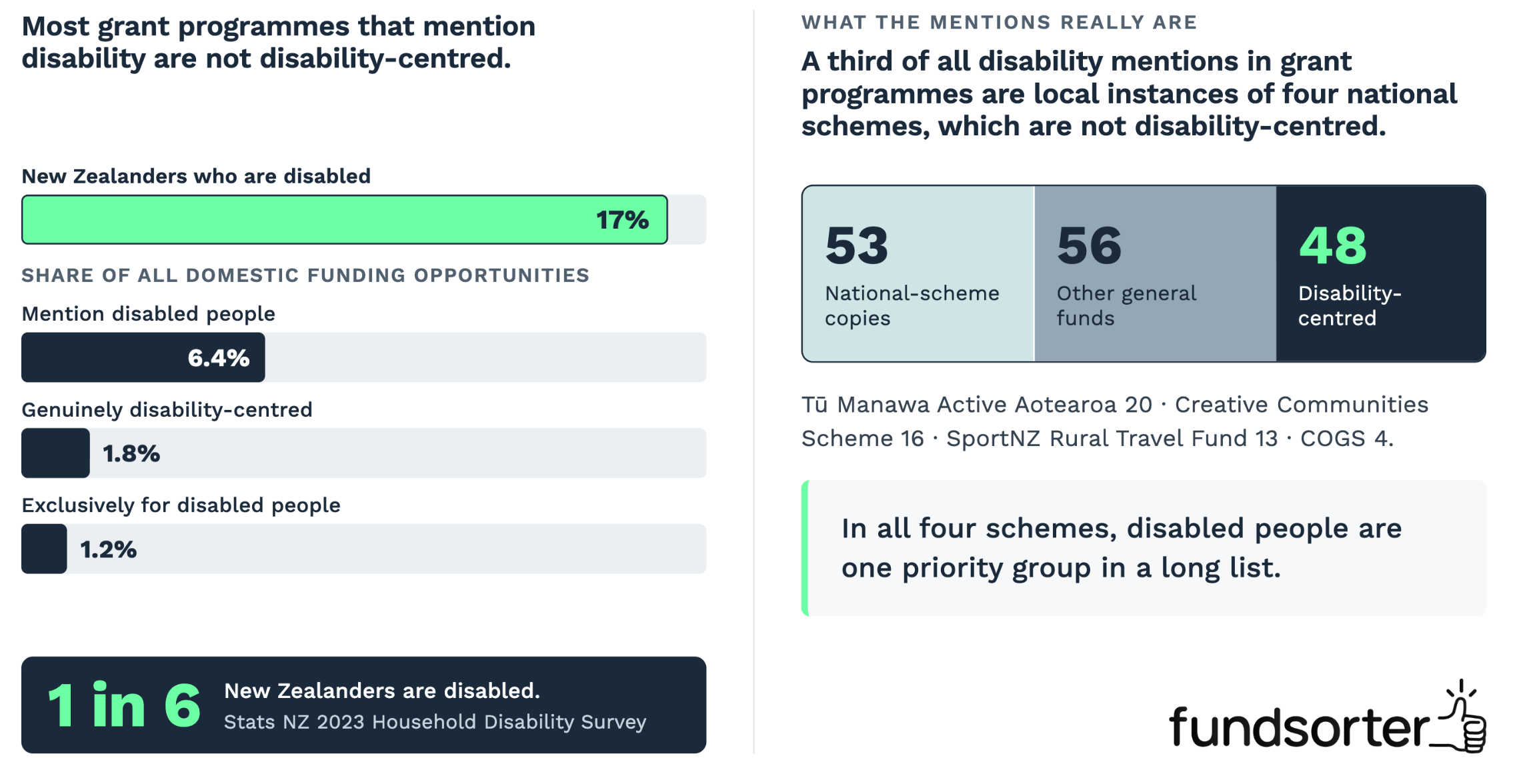
One in six people, one in fifty funds: 17% of the population is disabled, but genuinely disability-centred grants make up only 1.8% of the funding landscape.
We analysed the 150+ active grant opportunities in our database that relate to disability, across 100+ funders and discovered some important insights.
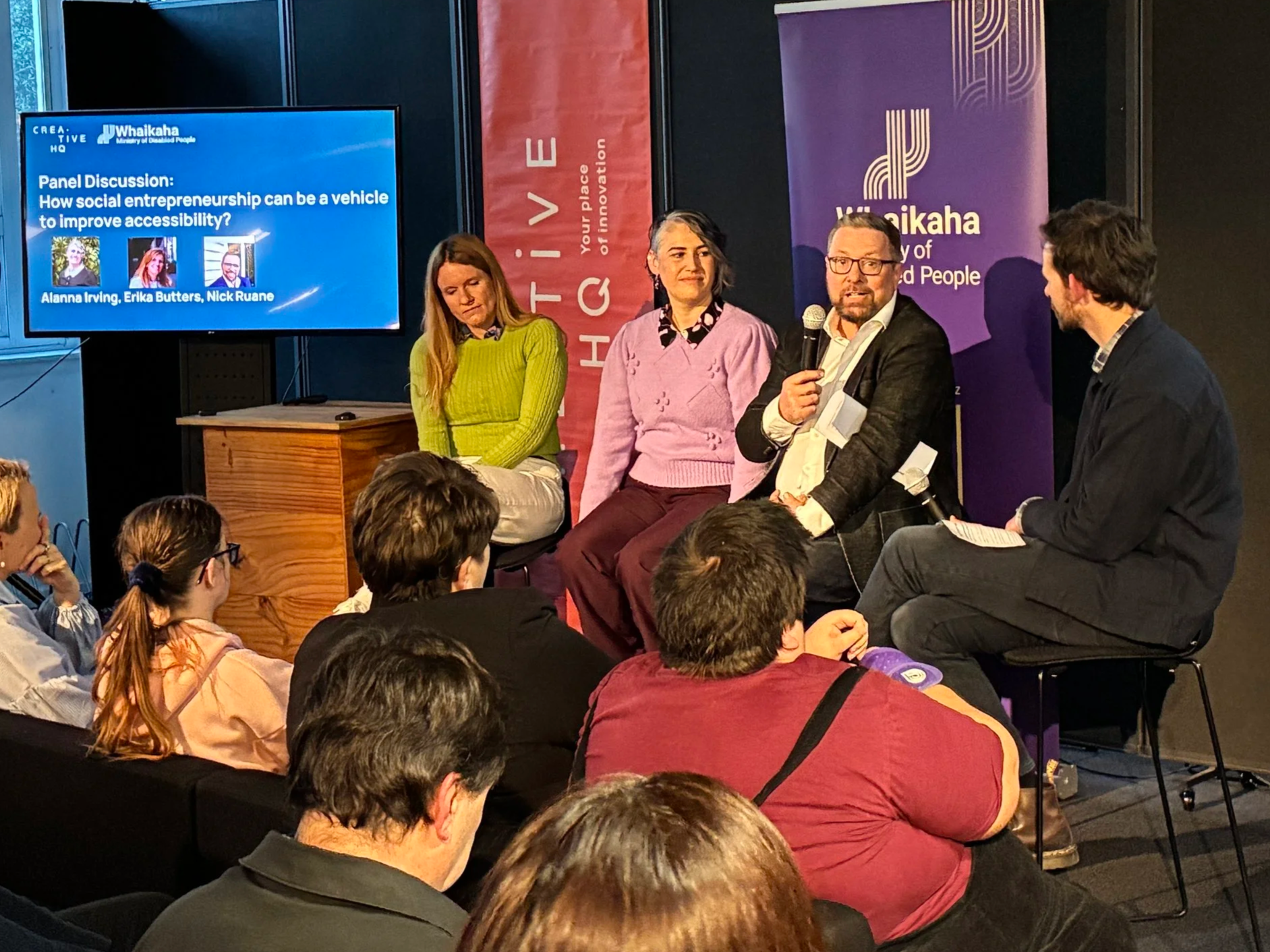
Fundsorter CPO Alanna Irving recently presented this data at the Access Activator Showcase, a partnership between Whaikaha and CreativeHQ, supporting innovative practical solutions that improve access and inclusion.
This analysis looks at grants for organisations and community groups that serve the disability community, not funding for disabled individuals or core health system funding.
Most grant programmes that mention disability are not disability-centred
While 6.4% of domestic grant opportunities mention disabled people, only 1.8% have disabled people as a central purpose, and just 1.2% exist exclusively for disabled people. Meanwhile, about 1 in 6 New Zealanders, 17 percent, are disabled (according to the Stats NZ 2023 Household Disability Survey).
A third of all disability mentions are local funds for four national schemes. Tū Manawa Active Aotearoa, the Sport NZ Rural Travel Fund, the Creative Communities Scheme and COGS are delivered as dozens of regional funds carrying nationally-set wording. Of these, disabled people appear only as one priority group in a long list, and none is designed around disability or by-and-for disabled people.
Another third of the funds are single programmes following a similar pattern of only mentioning disabled people as one of many priorities — only the last third are genuinely disability-centred funds.
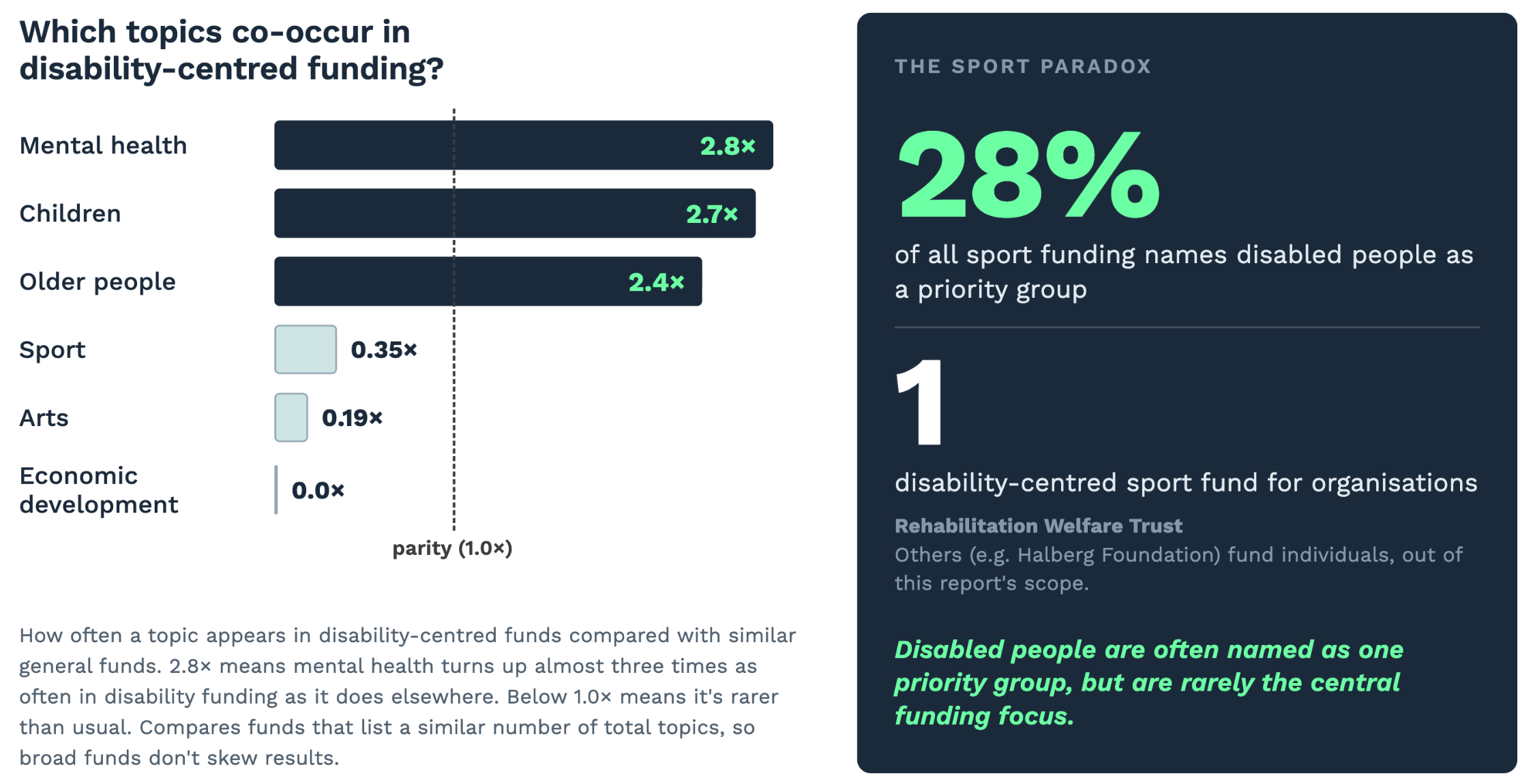
Dedicated disability funding concentrates on some domains while being absent from others
Disability-centred funds over-index robustly in children, mental health, older people and public health. This measures how often a topic appears in disability-centred funds compared with similar general funds. A figure of 2.8× means mental health turns up almost three times as often in disability funding as it does elsewhere. Below 1.0× means it's rarer than usual. This compares funds that list a similar number of total topics, so broad funds don't skew results.
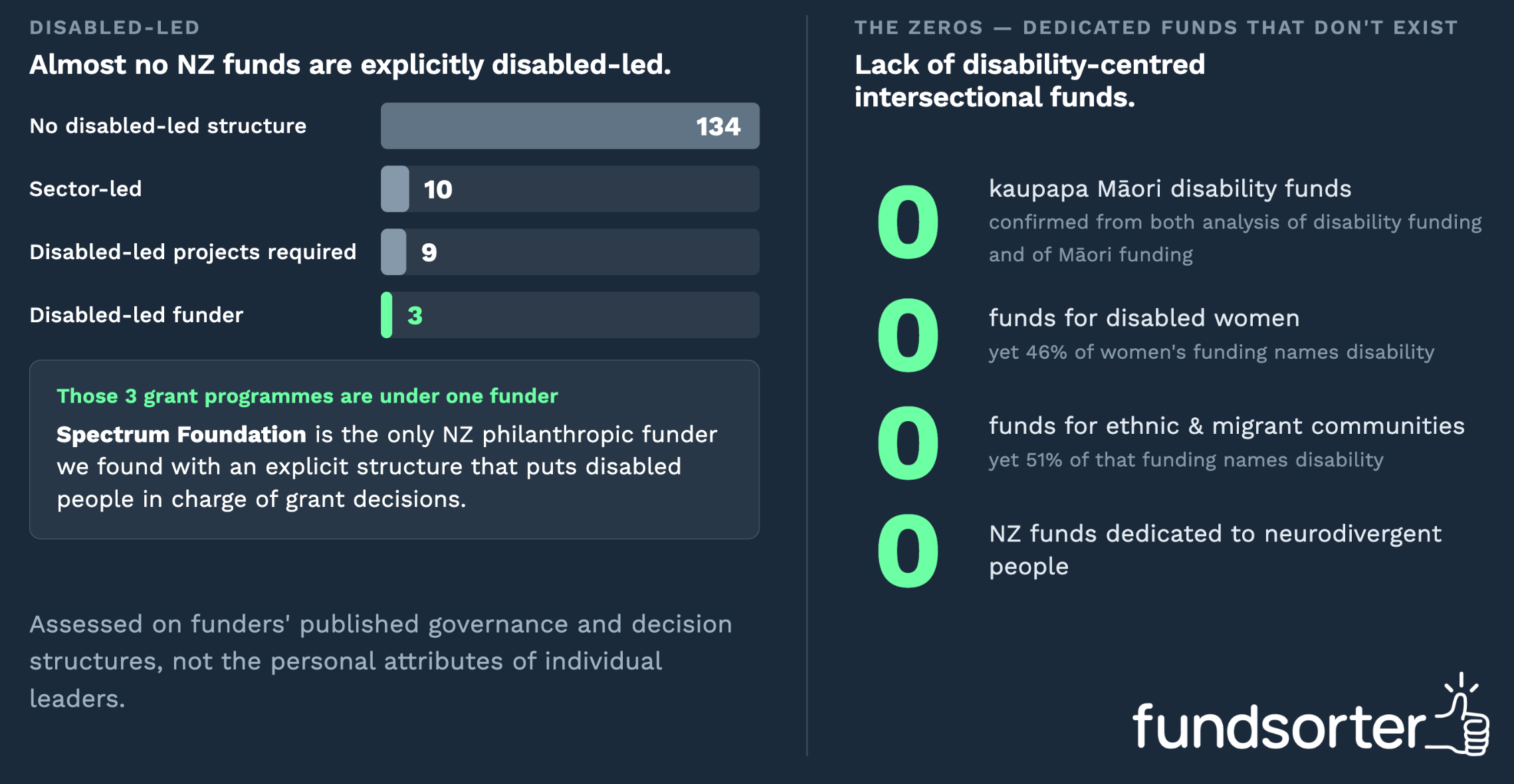
The starkest gap is sport: 28% of all sport funding names disabled people as a priority, yet only one disability-centred fund in our dataset focuses on sport (Rehabilitation Welfare Trust). Disabled people are a priority group for many, but are very rarely the core purpose. The same pattern holds for the arts, disabled women (nearly half of women's funding names disability; no dedicated disabled women’s fund exists), and disabled people in ethnic and migrant communities.
Almost no funds are disabled-led
Looking at funders' published governance information, it’s clear that disabled-led funds are exceedingly rare. This looks at how they describe themselves and who they say makes funding decisions, not whether individual leaders happen to be disabled or not. Spectrum Foundation is, as far as we can find, the only NZ philanthropic funder that puts disabled people structurally in charge of grant decisions. A handful of funds require or prioritise disabled-led projects, but that requirement sits in fund criteria, not funder governance.
There are few funds for specific impairments; many have none
Deaf and blind/low-vision communities account for seven dedicated domestic funds, reflecting long-established organisations. Beyond that, impairment-specific funding is nearly absent: mobility impairment has a single dedicated fund (and it is for children only), no NZ fund is dedicated to neurodivergent people, and psychosocial disability appears just once in the dataset. A handful of single-condition legacy trusts complete the picture. (It may be that impairment-specific funding for individuals is more common, but that’s out of scope for this analysis.)
No kaupapa Māori disability funding, and missing intersectionality
Our separate Māori funding analysis found that while 48% of disability funding names Māori, none of it is specifically kaupapa Māori (where serving Māori is the core purpose). Approaching from the disability data side confirms it: no fund is both genuinely disability-centred and genuinely Māori-centred. The closest are the Ministry of Disabled People's explicit tāngata whaikaha Māori priority and Le Va's Pasifika disability funds.
Dedicated disability funding is majority national, not local or international
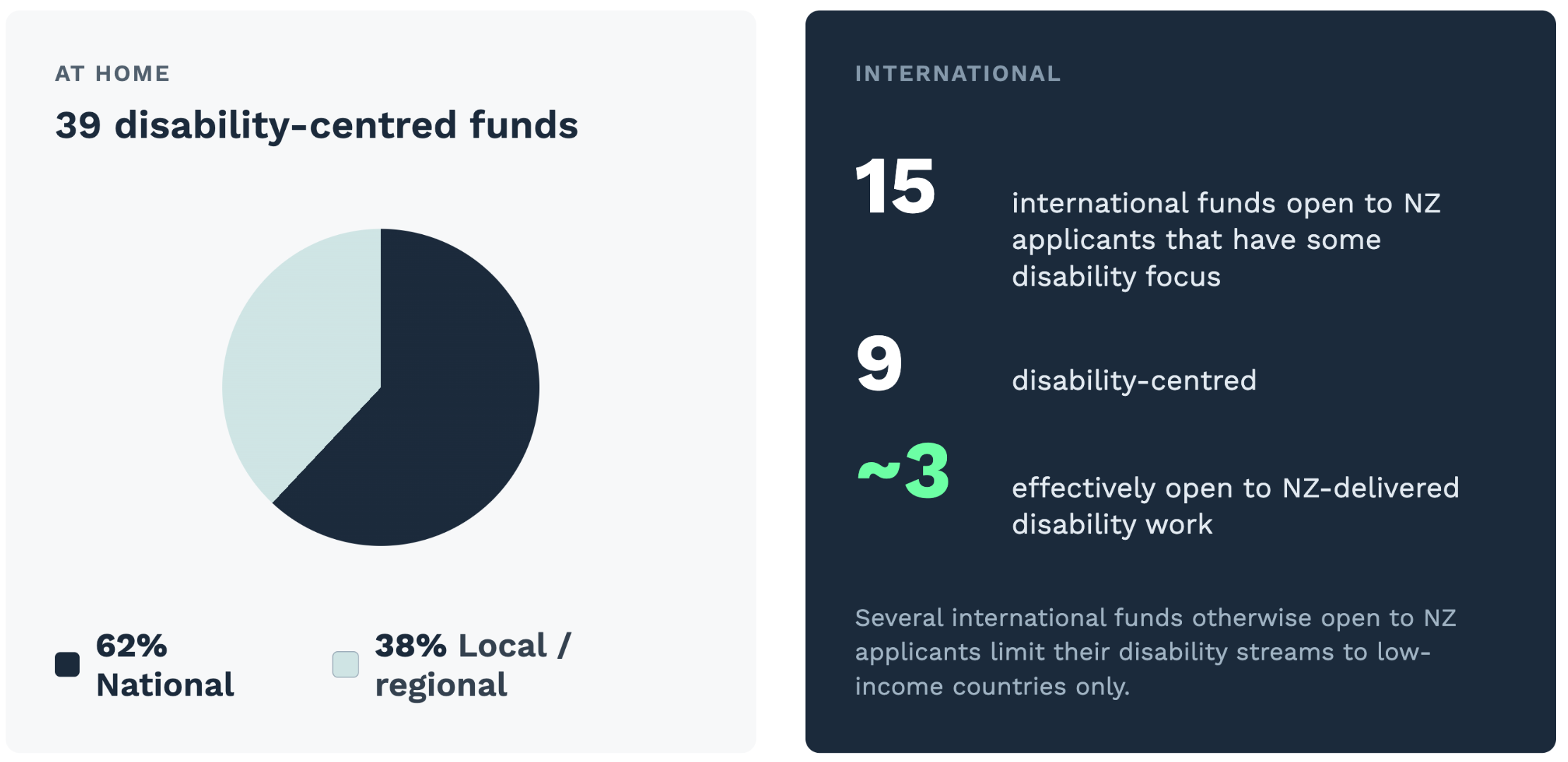
A majority of disability-centred opportunities are national (62%). International funding exists, but it’s less reachable than it looks. Some international funds with disability streams accept applications from NZ groups for general funding, but not for their disability streams (several earmark disability funding for low income countries). The effective open international offer for NZ disability work is about three funds.
The other part of the landscape: funding for individuals
This analysis covers funding for organisations. Funding paid directly to individuals is a major separate space that our dataset doesn’t cover. Government dominates it: Disability Support Services spends over $2.5 billion a year, and most charitable funds require applicants to exhaust state funding first.
The prior largest dedicated grant fund for disabled individuals, Lottery Individuals with Disabilities, distributed about $12 million in 2024/25. In that year, LIWD had $28 million of demand, showing the unmet need (stats from the Lottery Grants Board Annual Report). But LIWD was permanently closed in May 2026. There’s a new “Equipment for People with a Disability” stream within the newly restructured Lottery Fund, but decision making for those grants now sits with generalist regional committees, not a dedicated disability fund.
Charitable individuals funders, like condition-specific societies and assistance-dog trusts, include the many names New Zealanders most associate with disability funding, so keep this in mind when considering our organisation-facing data. But we can say that the thinness of disability funding for organisations in this analysis sits alongside visible unmet demand on the individual side as well.
While it’s clear there’s not enough funding in this space, Fundsorter makes it a lot easier to figure out which of the 150+ disability-related grant opportunities in our database are a fit. If you’re an organisation seeking grant funding, try it for free.
