
Why charities are tired
The hidden, exhausting maths of grant funding in Aotearoa
Anyone who seeks funding for charities and community groups can tell you that it’s never just one grant. You have to patchwork together multiple applications for every project. Newly analysed data of thousands of real funding goals and thousands of available grants [1] reveals why this is so exhausting.
Fundsorter helps grant-seekers zero in on the funding opportunities [2] that are the best fit for their needs, and saves heaps of time drafting applications. In doing this, we’ve gathered a lot of rich data on what funding is available and what’s actually needed.
The grants are small
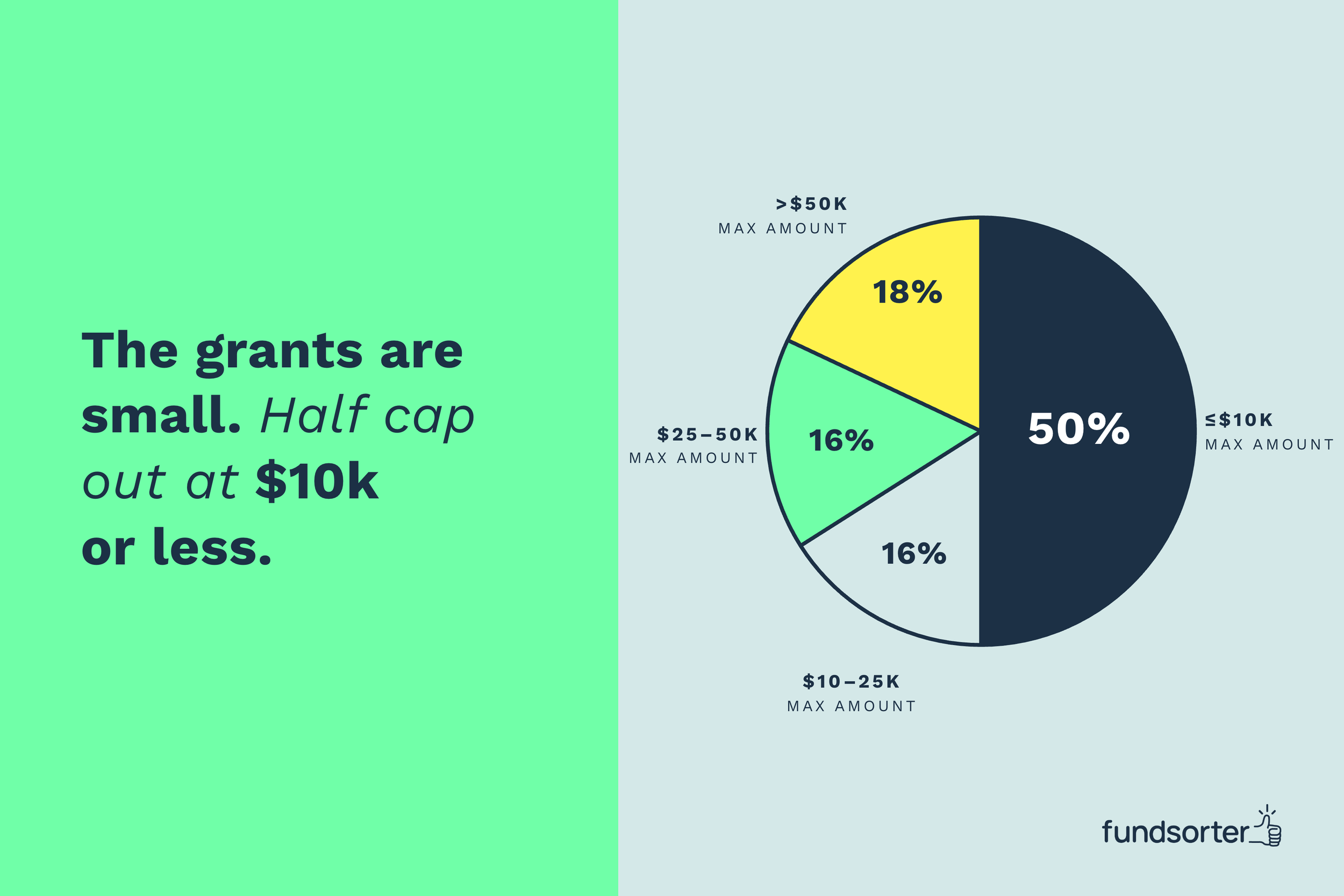
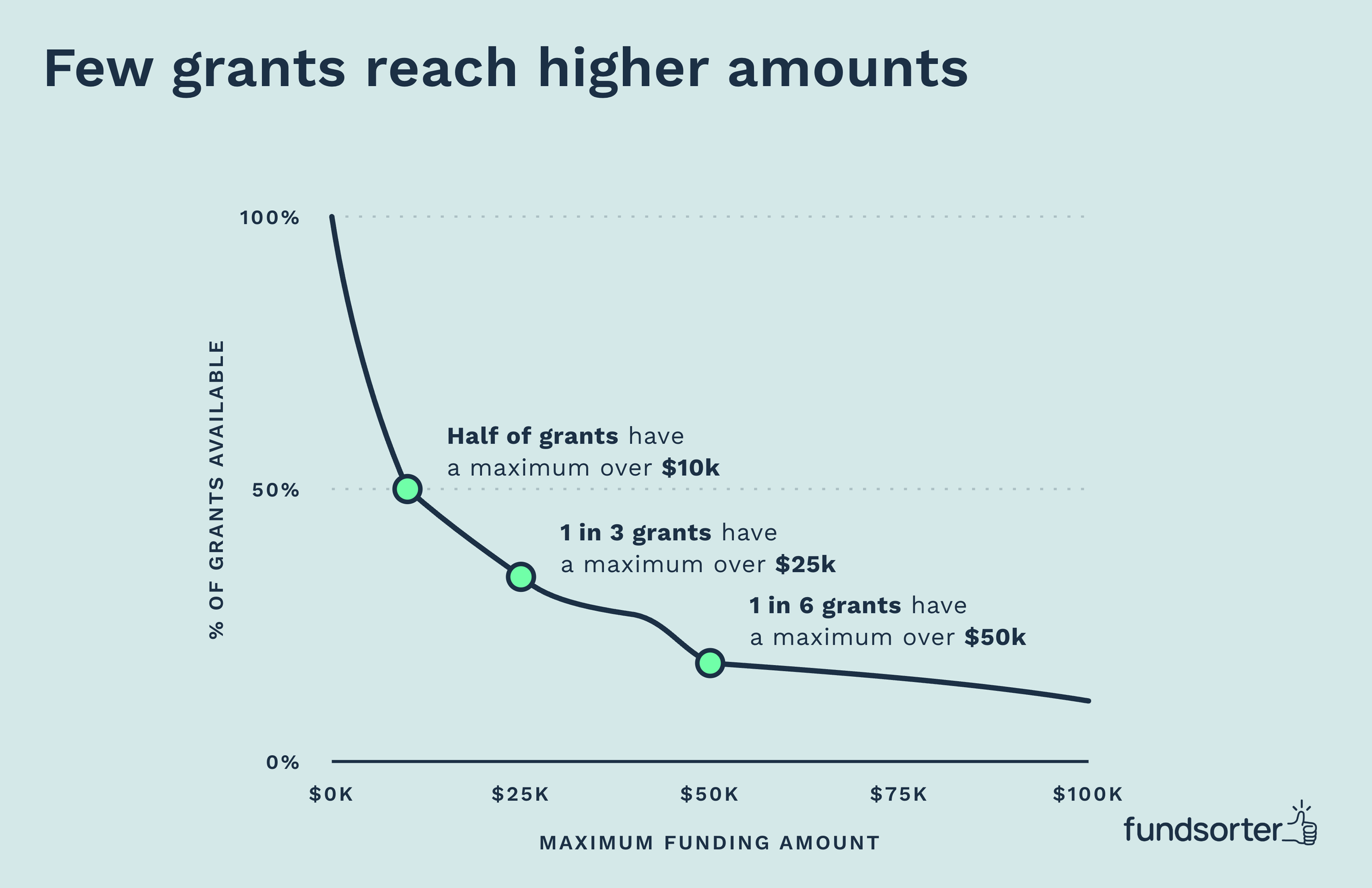
Start with what's actually available. Among New Zealand funding opportunities, half cap out at maximum grants of $10,000 or less, and two-thirds at $25,000 or less. Grants over $50,000 are rare, only about 1 in 6. The small grant isn't the exception, it's the norm.
The needs are large
When a charity sets a funding goal in Fundsorter, we ask two things: the full amount needed (funding goal), and the minimum they'd accept per grant and still find it worthwhile to apply. The median full funding goal is around $37,000. The median minimum a charity will accept per grant is just $5,000. The gap between those two numbers tells a story.
Charities aren't setting that minimum by accident. It matches reality, because they know what’s out there. Setting a minimum of $5,000 means over 80% of available grants will match. They're setting the floor exactly at the level that grants reliably reach.
Even the more “ambitious” grant seekers, who set their minimums at the 75th percentile, are putting their floor at $10,000, exactly the typical grant’s maximum amount. It’s not coincidental.
You have to make a patchwork
That minimum figure a grantseeker will apply for shows how fragmented they expect their funding to be.
Of grant seekers who set a minimum, the median acceptable grant is just one-fifth of the full amount needed, meaning charities are prepared to assemble funding from five separate grants. More striking still, 40% show willingness to accept 10% or less of the total required from any single grant, meaning they’d need a patchwork of ten grants or more. Holding out for the whole amount in one go is vanishingly rare: it happens only 7% of the time.
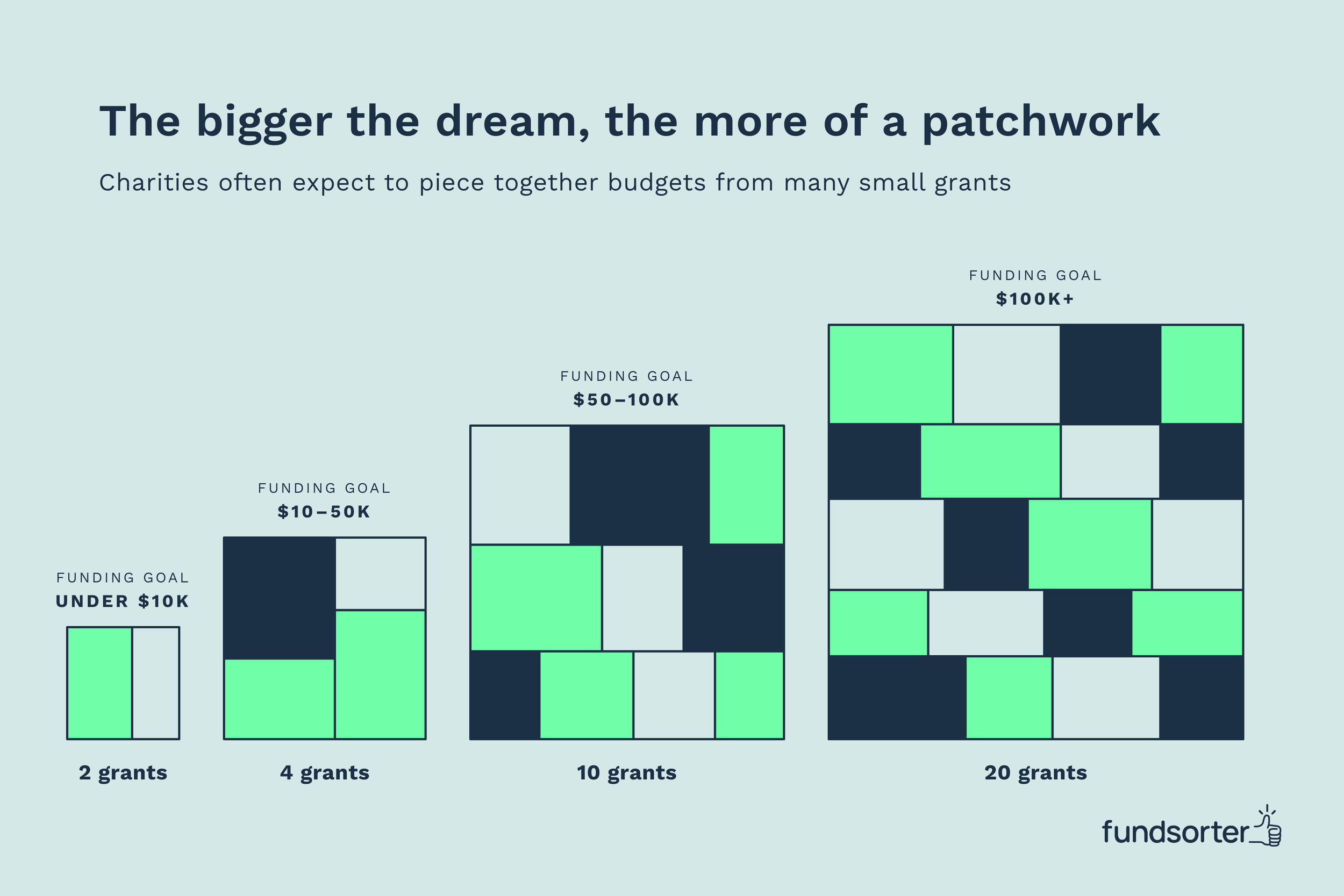
As goals grow more ambitious, charities expect a patchwork budget of increasingly more pieces from different funders. We can see this by comparing the total amount grant seekers need to the minimum they’d accept per grant.
A funding goal under $10k is typically sought from up to 2 grants; $10–50k from 4 grants; $50–100k from 10 grants; and a $100k+ project from up to 20 separate grants.
Single large grants that fund major projects do happen—there’s a big spread across diverse cases. But looking at what grant seekers expect across thousands of real funding needs, many patchwork pieces are typical. This makes sense when you recall that half of all grants available max out at $10k, so charities know bigger options are limited.
One big project means many grants, each with its own application, deadline, budget proposal, narrative, relationship management, and accountability report. That sound you hear is thousands of grant-seekers screaming into their pillows.
Multiply all this several more times
That’s assuming you even get the grant you applied for. In reality, you’re not going to win them all, so multiply that effort several times again.
And the grants you get are likely going to be only part of the amount applied for. In the most recent year reported, the largest community grant funder in the country, Lotteries, approved nearly three-quarters of applications, but only granted on average 36 cents for every dollar requested [3]. So, to get the whole dollar you actually need, multiply the effort even further.
If that weren’t enough, your mahi is ongoing but most funding is only for a single round. So, you’ll have to do it all again next year.
No wonder charities are exhausted!
The grants are small, the needs are large, and the only way to bridge the gap is to apply, and apply, and apply again. Charities aren't inefficient — they're doing exactly what the funding landscape demands, building a budget out of many small pieces, one painstaking application at a time. It’s not so surprising that they spend up to 25% of their time on grant administration.
While we can’t change the underlying maths of community sector resourcing overnight, better tools can really help. Fundsorter helps cut the time spent on finding and applying for grants up to 90%, and these exhausting stats show why this is so important.
———————————-
[1] We looked at 2,100+ real funding needs and 2,000+ grant opportunities for these stats.
[2] Of grants where the funder states a maximum funding amount, which are the majority of our database.
[3] Lottery Grants Board Annual Report FY24/25
